Reference
Dashboard
The read-only web dashboard built into the QueueFlow server at /ui/, what it shows, how it authenticates, and its limits.
Since 0.3.0 the server serves a web dashboard at /ui/ on the API port, for example http://localhost:8000/ui/. It is embedded in the binary, needs no build step or extra service, and is read-only: it shows what the API exposes and performs no actions.
#What it shows
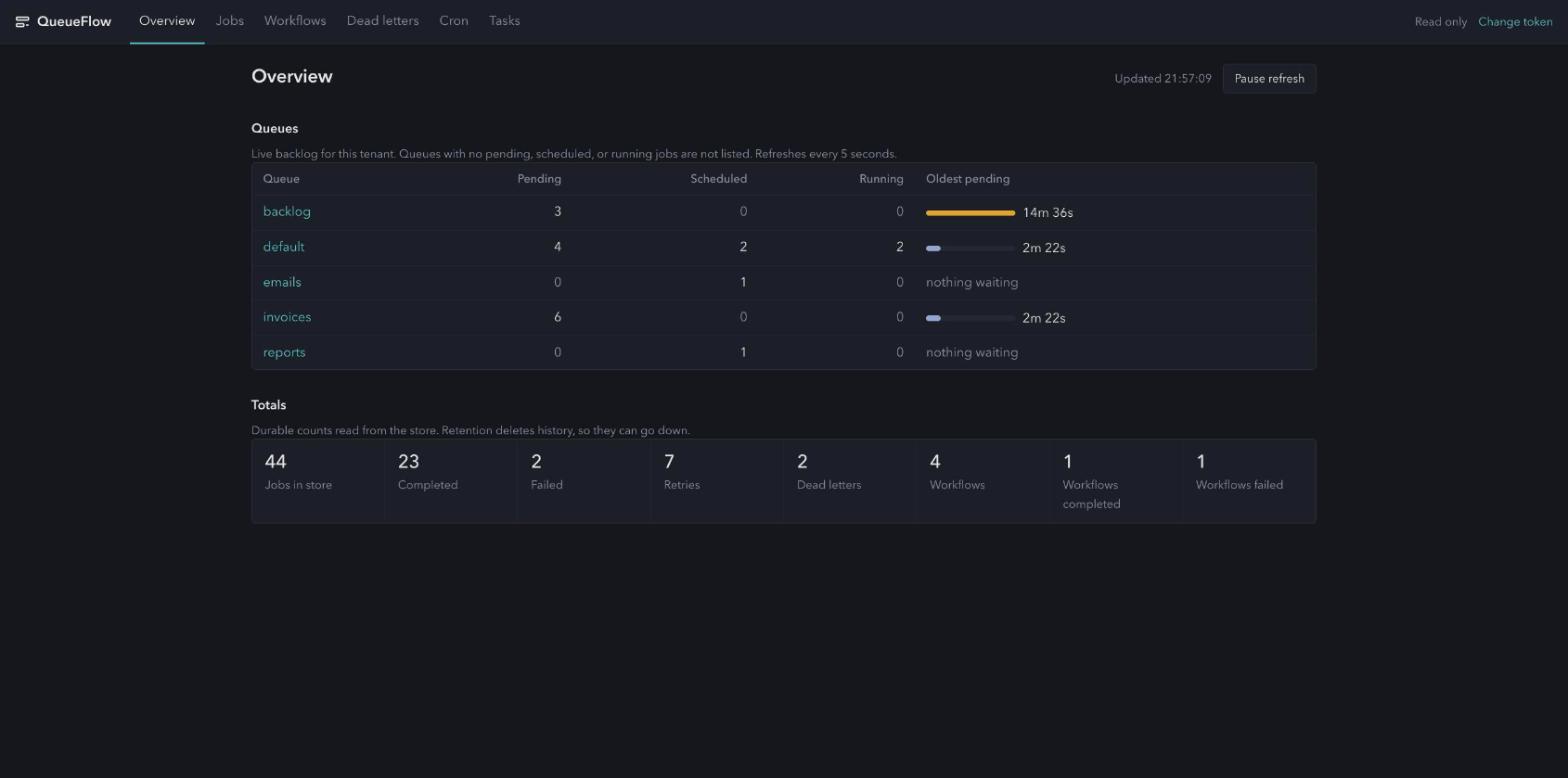
- Queues: per-queue backlog from
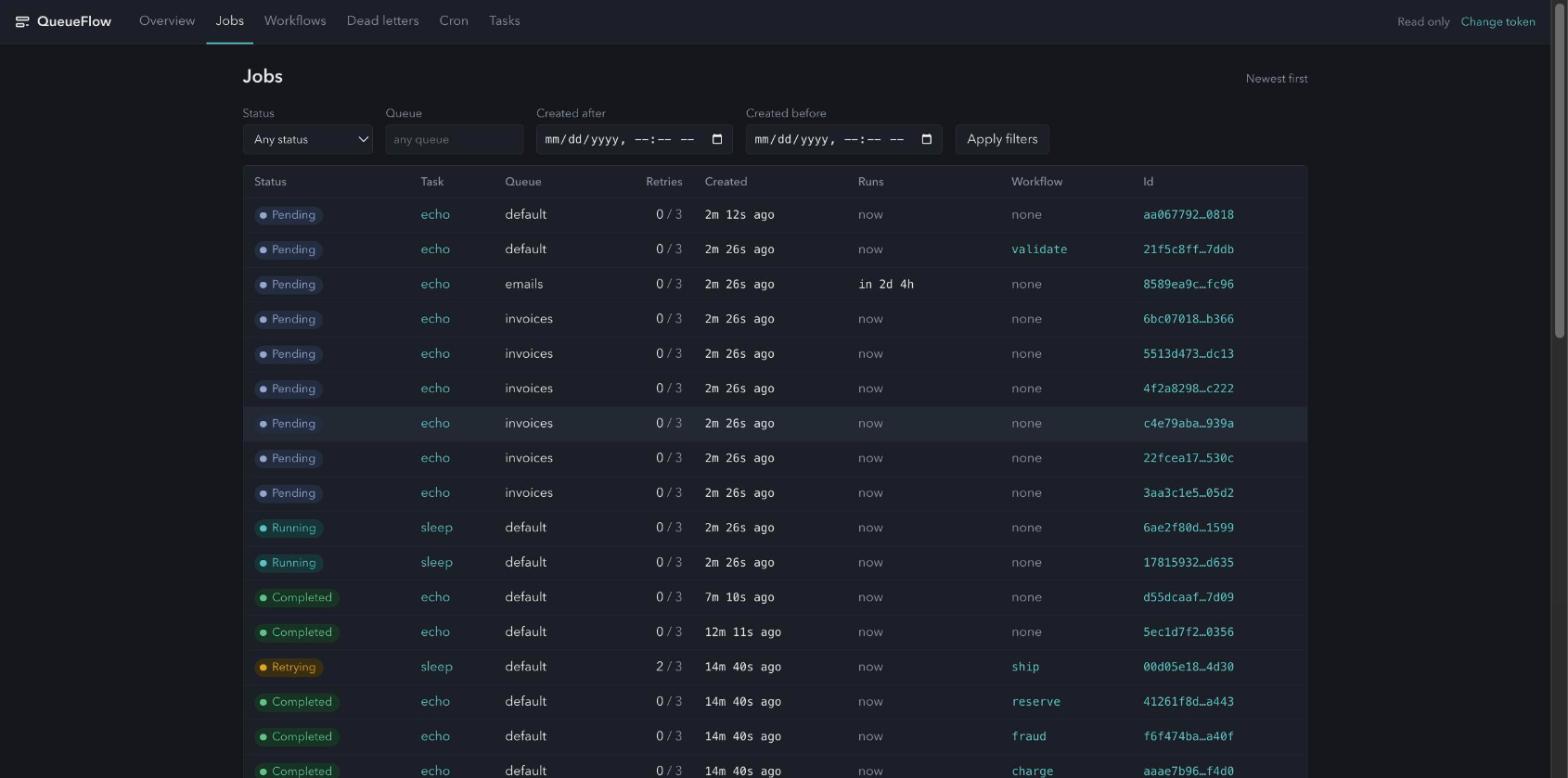
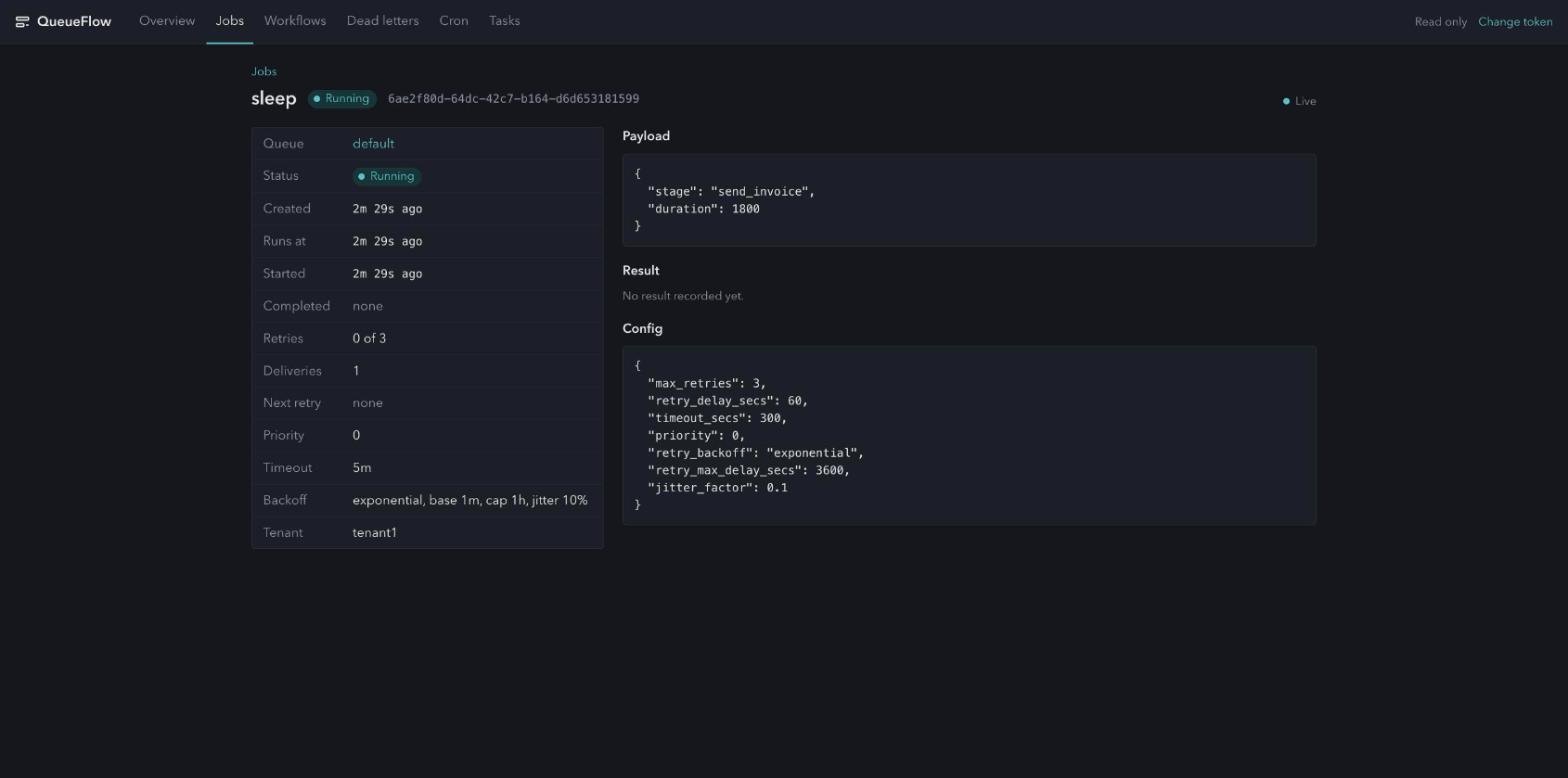
GET /api/v1/queues(claimable, scheduled for later, running, and the age of the oldest claimable job), with tenant-wide totals fromGET /api/v1/stats. Refreshes every 5 seconds with a pause toggle. - Jobs: filter by status, queue, and creation time; keyset paging, newest first. The detail view shows status, timestamps, config, payload and result as JSON, the error message, retry count and next retry, and a link to the owning workflow. A running job updates live over the job's SSE stream.
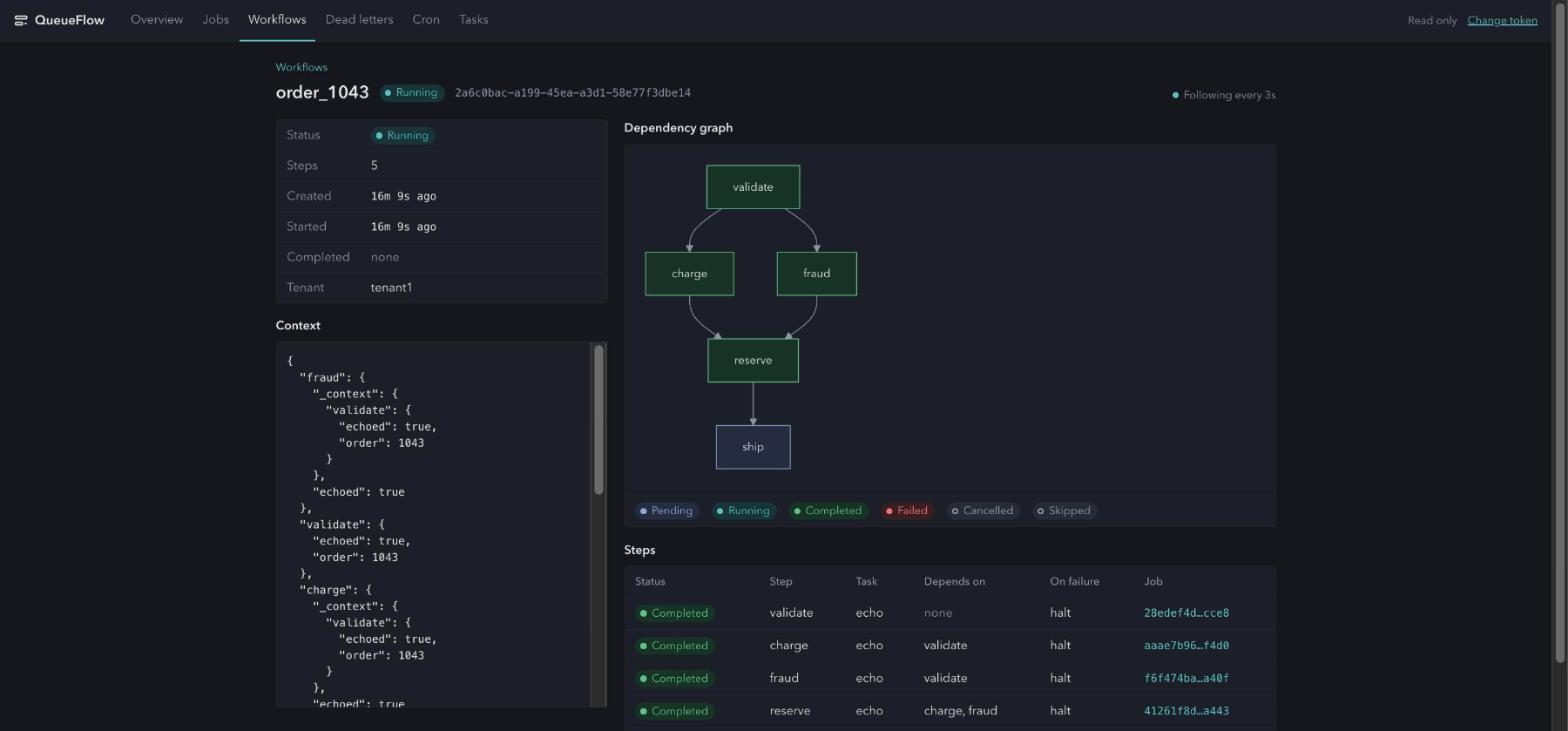
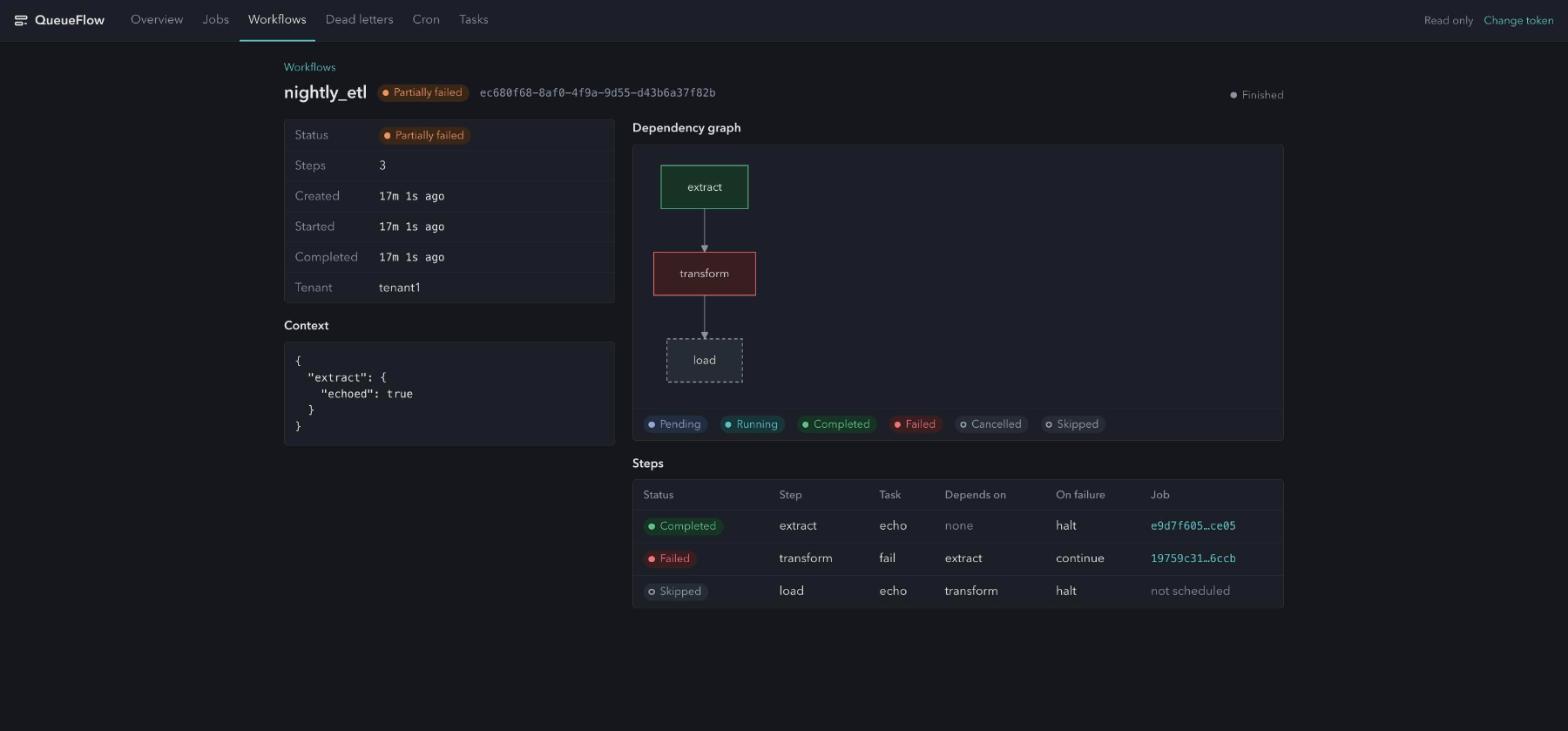
- Workflows: list with a status filter; the detail view draws the dependency graph with each step coloured by its state, plus a steps table and the shared context.
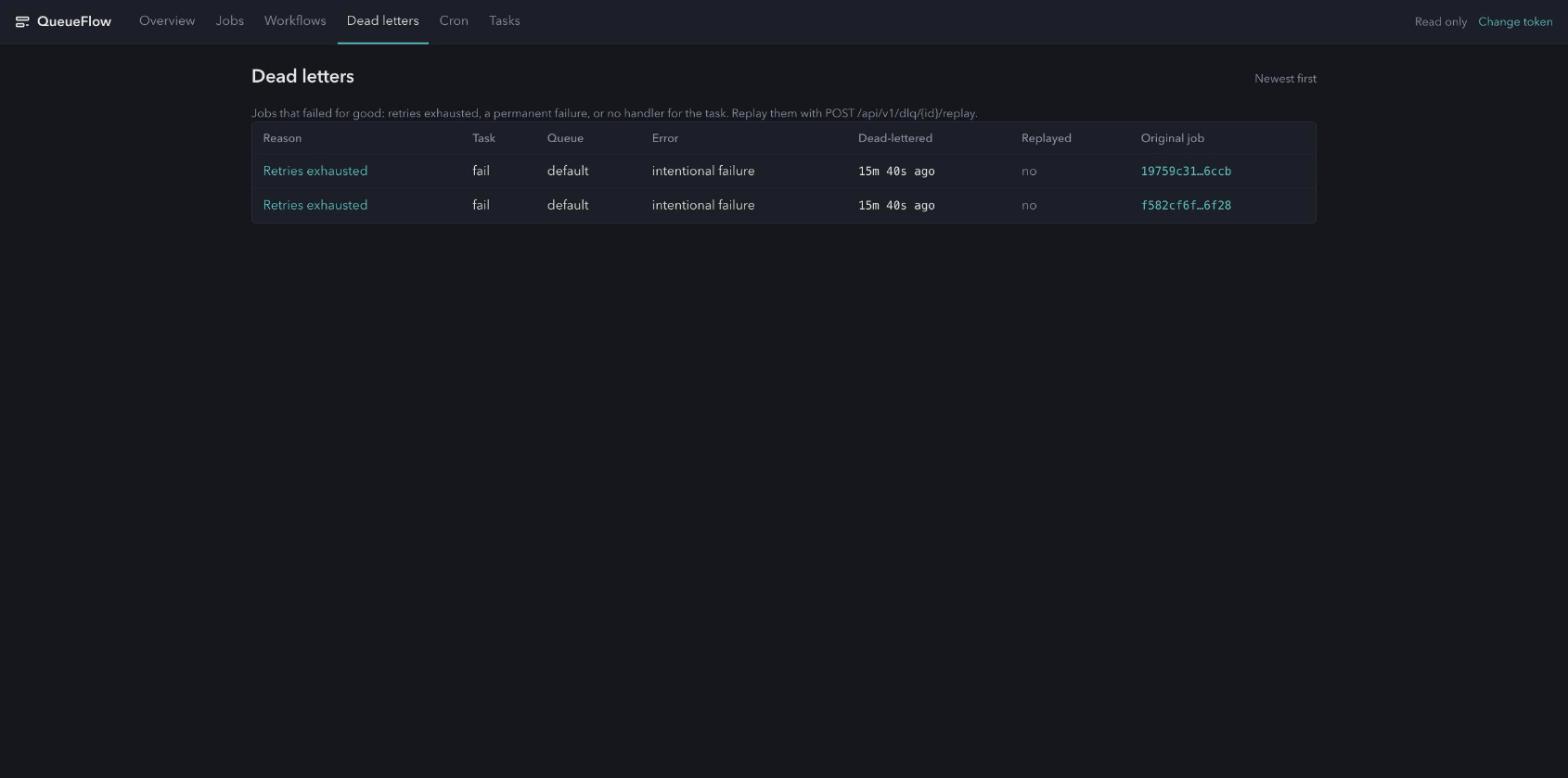
- Dead letters: list and detail with the reason, error, and a link to the original job.
- Cron: every schedule with its expression, next run, last enqueue, and whether it is enabled.
- Tasks: the handlers registered in the server.
#Authentication
The dashboard asks for a bearer token once and keeps it in the browser's session storage, then calls the same-origin /api/v1 endpoints with it. Use a tenant credential (an API key or JWT); the worker token is refused on these routes. Everything shown is scoped to that tenant. In --dev mode any non-empty token works.
The static files under /ui/ are served without authentication and contain no data. They are not part of the OpenAPI document.
#Limits
- Read-only. Cancel, replay, pause, and resume are planned for a later release and will sit behind a confirmation.
- The dependency graph is rendered with Mermaid loaded from
cdn.jsdelivr.neton demand. Without access to the CDN the Mermaid source is shown as text instead; the rest of the dashboard has no external dependencies. - Queues disappear from the overview once all their jobs are terminal, because
GET /api/v1/queuesreports only queues with non-terminal jobs. - The SSE stream is consumed over
fetchso the token can travel in a header; the browser's nativeEventSourcecannot be used.